
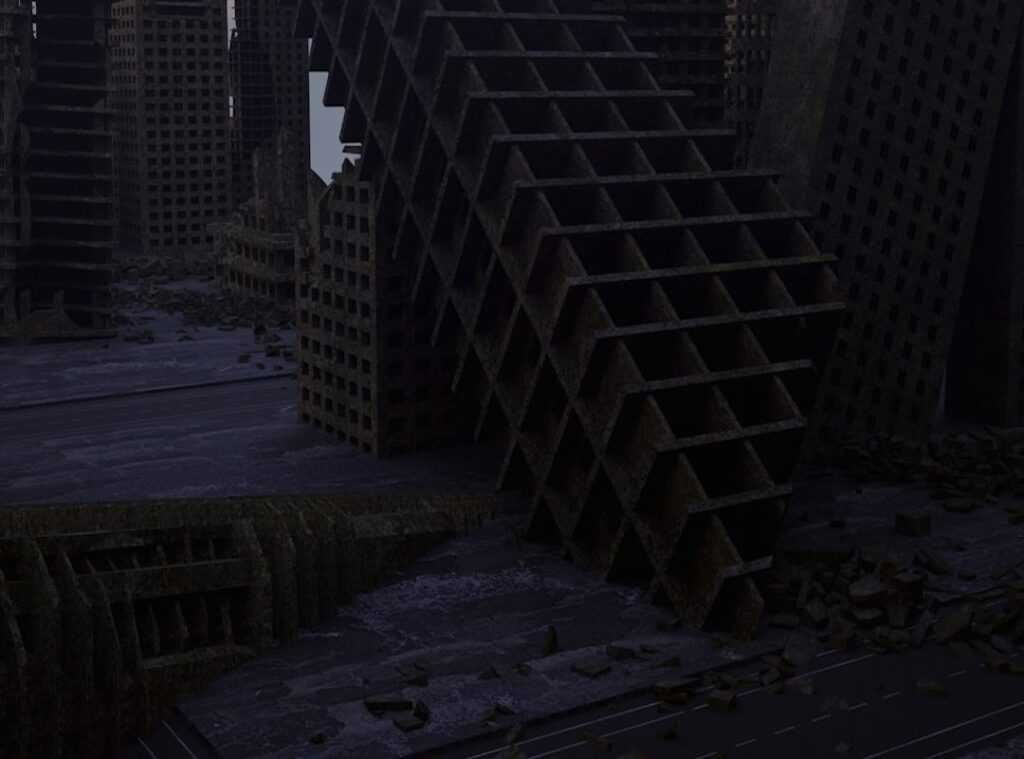
The world loves a good apocalypse, right? We crave the thrill of survival in a crumbling world, and game engines post-apocalyptic settings deliver just that. But what makes a game engine truly capture the desolate beauty of a ruined earth?
I’ve been navigating this wasteland myself, and I’ve got opinions.
You’re not alone if you’re wondering how developers create such compelling, eerie worlds. Game engines have evolved, and their role in shaping these environments can’t be overstated. They mix the art of level design with player behavior in ways that keep us on edge.
Does it really matter which engine powers your favorite games? Absolutely. The right engine can turn a good game into an unforgettable experience.
But not every engine is up to the task.
In this article, we’ll explore what makes these engines tick and why they matter. You’ll get takeaways from industry insiders and discover the mechanics behind your favorite apocalyptic worlds.
The Anatomy of a Wasteland: Core Engine Requirements
When diving into the world of game engines for post-apocalyptic settings, there’s a lot to consider. You can’t just pick any engine off the shelf. You have to understand what makes the post-apocalyptic genre tick.
Why? Because we’re talking about changing world systems. Environments in these games aren’t just static backdrops.
They need changing weather, day and night cycles, and evolving decay. It’s not just rubble. It’s a living, breathing wasteland.
Take flexible environments. Think Fallout’s endless open worlds versus Metro’s tight, eerie corridors. These demand different tech.
Vast worlds need smooth rendering so players don’t see the seams (pun intended). Dense areas? They require strong asset streaming to keep every detail sharp and immersive.
You can’t just slap any tech together and call it a day.
Then there’s advanced AI behavior. Your AI can’t just wander around clueless. It needs to get through debris, show survival instincts, and maybe even act like it’s mutated.
Remember those bio-hazardous threats? Yeah, they need to be convincing. AI has to feel real, like it’s part of the world and not just a clunky script running in the background.
Physics and destruction? the real fun begins. A wasteland without destruction is like a pop song without a catchy hook. You want rusted metal that bends under pressure, concrete that crumbles realistically.
It’s about immersion. For the future of these games, look into Future Real Time Rendering Apocalyptic Games. This isn’t just tech talk.
It’s the backbone of creating worlds players can’t wait to explore.
The Titans of Ruin: Unreal Engine vs. Unity
When it comes to game engines post-apocalyptic, there’s always a debate: Unreal Engine or Unity? Each has its strengths, and I’ve dabbled in both. to the nitty-gritty.
Unreal Engine blows me away with its graphical prowess. Ever heard of Nanite? This is a technology that renders hyper-detailed landscapes like graveyards of civilization.
Imagine ruins stretching into infinity without choking your computer. Games like “The Matrix Awakens” demonstrate this, and it’s clear why big studios lean towards Unreal for that jaw-dropping realism.
Blueprint visual scripting is another gem. It’s all about rapid prototyping. Survival games need complex systems.
Think crafting, base-building. With Unreal, you can throw together these mechanics without drowning in code. Quick iteration matters in game dev, trust me.
Unity? A different beast entirely. It’s the flexibility king.
Indie developers adore it. Why? The massive asset store.
It’s a treasure trove for those aiming for a stylized apocalypse over photorealism, where creativity reigns supreme.
C# scripting in Unity is solid for custom features. Want spores floating ominously, or unsettling radiation effects? Unity’s particle system delivers.
It’s like building a custom bio-hazard playground. You can create rich environmental storytelling, which is big in post-apocalyptic settings.
Now, if you’re curious about how different engines stack up in real projects, check out project shutdown: a 3d post apocalyptic survival tps. It showcases what happens when developers push the boundaries of engine capabilities.
In the end, it’s not about which engine is better. It’s about what you want to create. Unreal is your go-to for realism.
Unity, for an original, stylized vision. Choose your weapon wisely.
Forging Worlds from Scratch: The Power of Proprietary Engines
Ever wonder why some game worlds feel more alive than others? It’s not just magic (though that helps). Studios building their own tech can craft experiences off-the-shelf engines can’t touch.

Take the 4A Engine from the Metro series. This thing wasn’t just built; it was forged in fire to handle confined spaces with breathtaking detail. The lighting effects?
It’s like wandering through a nightmare, fully aware you’re not waking up anytime soon.
They’re not just a pretty face. They create this oppressive atmosphere you can’t shake. The result is a game that feels like a claustrophobic thriller, where every shadow could be your last mistake.
Now, the Creation Engine. It’s a bit like an old car that’s been souped up over the years. Sure, it’s got quirks, but can you imagine Fallout or The Elder Scrolls without it?
This engine excels at making worlds feel lived-in. It handles an absurd number of interactive objects and complex NPC schedules like it’s nothing. The downside?
Sometimes it feels like it’s held together with duct tape. Yet, it’s the reason we get such rich, reactive worlds.
And then there’s the Decima Engine, known for games like Death Stranding. This one handles terrain deformation and asynchronous multiplayer like a champ. It’s custom-built for unique mechanics that standard engines just can’t pull off.
Terrain that warps underfoot and a shared world experience in a desolate setting? That’s a recipe for immersion.
It’s these unique engines that make such worlds possible. And let’s not forget sound design’s role in this mix. Check out how studios are revolutionizing sound design apocalypse settings to complement these engines.
It’s all about creating that perfect storm of atmosphere and mechanics. That’s why proprietary engines are key in crafting unforgettable post-apocalyptic games.
Simulating the Collapse: The Future of Changing Wastelands
I’ve been around the block with post-apocalyptic games, and let me tell you, we’re on the brink of something big. Forget about just better graphics. It’s about worlds where Procedural Ecological Decay changes everything.
Imagine this: cities slowly swallowed by nature, radiation zones that shift due to weather. It’s not static anymore. Game engines are pushing boundaries, making decay part of the gameplay itself.
And AI? It’s evolving too. It isn’t just about walking in a straight line to find you.
These AI systems are smart, learning from your every move. They adapt and even mutate, morphing into new threats. It’s like a horror film where the monster gets smarter every time you beat it (but without the cheesy jump scares).
This ties directly into biohazard mechanics, making survival more than just a fight. It’s strategic and unpredictable.
The future isn’t just shiny visuals. It’s about game engines post-apocalyptic, creating worlds that live and breathe with you. They’re characters themselves, unpredictable and reactive. we’re headed, and honestly, I can’t wait to see how these innovations change how we play.
Crafting Your Perfect Digital Doomsday
Building your apocalypse isn’t just about chaos; it’s about choice. You now know how deliberate picks in game engines post-apocalyptic worlds shape your narrative. Sure, choosing an engine is paralyzing.
But focus on what your genre needs. Whether it’s Unreal, Unity, or something custom, the right foundation transforms your wasteland. So what’s next?
Start envisioning how you’ll redefine survival with these solid tools. Ready to build the next new game? Dive in and give your digital apocalypse a unique heartbeat.
Don’t just follow trends. Lead them. Create the future of gaming.
It’s your wasteland. Make it unforgettable.
 There is a specific skill involved in explaining something clearly — one that is completely separate from actually knowing the subject. Xyphara Durnhanna has both. They has spent years working with game industry buzz in a hands-on capacity, and an equal amount of time figuring out how to translate that experience into writing that people with different backgrounds can actually absorb and use.
Xyphara tends to approach complex subjects — Game Industry Buzz, Post-Apocalyptic Game Engine Innovations, Biohazard Game Mechanics and Strategy being good examples — by starting with what the reader already knows, then building outward from there rather than dropping them in the deep end. It sounds like a small thing. In practice it makes a significant difference in whether someone finishes the article or abandons it halfway through. They is also good at knowing when to stop — a surprisingly underrated skill. Some writers bury useful information under so many caveats and qualifications that the point disappears. Xyphara knows where the point is and gets there without too many detours.
The practical effect of all this is that people who read Xyphara's work tend to come away actually capable of doing something with it. Not just vaguely informed — actually capable. For a writer working in game industry buzz, that is probably the best possible outcome, and it's the standard Xyphara holds they's own work to.
There is a specific skill involved in explaining something clearly — one that is completely separate from actually knowing the subject. Xyphara Durnhanna has both. They has spent years working with game industry buzz in a hands-on capacity, and an equal amount of time figuring out how to translate that experience into writing that people with different backgrounds can actually absorb and use.
Xyphara tends to approach complex subjects — Game Industry Buzz, Post-Apocalyptic Game Engine Innovations, Biohazard Game Mechanics and Strategy being good examples — by starting with what the reader already knows, then building outward from there rather than dropping them in the deep end. It sounds like a small thing. In practice it makes a significant difference in whether someone finishes the article or abandons it halfway through. They is also good at knowing when to stop — a surprisingly underrated skill. Some writers bury useful information under so many caveats and qualifications that the point disappears. Xyphara knows where the point is and gets there without too many detours.
The practical effect of all this is that people who read Xyphara's work tend to come away actually capable of doing something with it. Not just vaguely informed — actually capable. For a writer working in game industry buzz, that is probably the best possible outcome, and it's the standard Xyphara holds they's own work to.