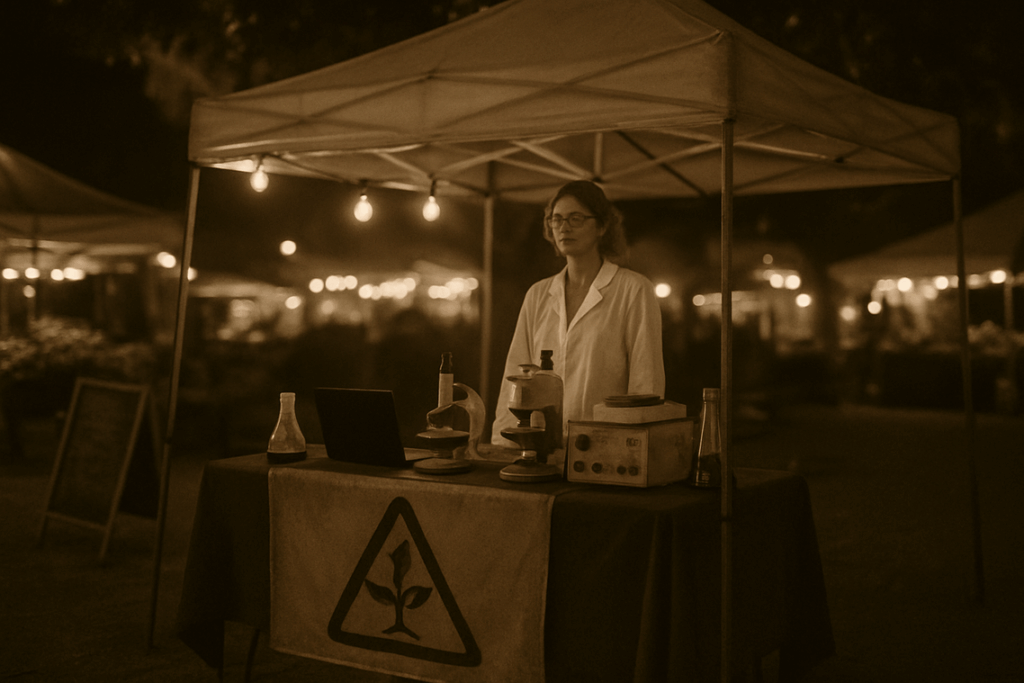
I’m tired of seeing the same glowing green barrels in every game that claims to be about biohazards.
You know the ones. They sit in corners. They explode when you shoot them. Maybe they damage you if you stand too close. That’s it.
Real environmental biotechnology is so much wilder than that. And most games are leaving incredible mechanics on the table.
I’ve been digging into how actual biotech systems work. The way organisms adapt. How contamination spreads. What happens when biological systems interact with each other in unpredictable ways.
This article shows you how real science can transform game design. Not just the visuals. The actual gameplay.
We’re talking about levels that evolve based on player choices. Resource systems that feel alive. Post-apocalyptic worlds where the environment is an active threat, not just a backdrop.
evebiohaztech has been breaking down these concepts for developers and gamers who want something deeper than the usual biohazard aesthetic.
You’ll see how contamination mechanics can create tension. How biological systems can replace tired crafting loops. How environmental threats can force you to think differently about every decision.
This isn’t about making games more realistic. It’s about making them more interesting.
What is Environmental Biotechnology? (A Gamer’s Crash Course)
You know how in games you’ve got different tools for different problems?
Environmental biotechnology works the same way. It’s using living organisms like microbes and plants to solve environmental problems. That’s it.
Think of it as your loadout for cleaning up the planet.
Now let me break down the main mechanics you need to know.
Bioremediation is when you deploy microbes to clean up contamination. Picture this: there’s a toxic spill in your game world. You can’t just walk through it or it’ll drain your health bar. So you release specific bacteria that eat the toxins and neutralize them over time.
The area slowly becomes safe again. That’s bioremediation in action.
Phytoremediation takes a different approach. Instead of microbes, you’re using plants to absorb pollutants from soil or water. Imagine planting a specific type of glowing fungus in irradiated soil (kind of like those mushrooms in Chernobyl that actually exist). The plants pull the radiation out of the ground, and once they’ve done their job, you can harvest them for crafting materials.
The soil’s clean. You’ve got resources. Win-win.
But here’s where it gets interesting.
Bio-mining and bio-fuels push this concept further. You can use organisms to extract metals from ore or create energy from organic waste. It’s like having a science-based crafting system where your base produces fuel from composted materials or uses bacteria to pull rare metals from low-grade deposits.
At evebiohaztech, I look at how these real-world processes could translate into game mechanics. Because honestly? Nature already figured out some pretty clever solutions. We just need to understand how they work.
From Science to Scenery: Crafting Evolving Game Worlds
Most games treat environments like wallpaper.
You walk through them. You fight in them. But they never really change.
I want to show you something different.
What if the world itself became part of your strategy? Not just a backdrop but a living system that responds to every choice you make.
Think about it. You’re standing at the edge of a toxic river. The water glows an unnatural green and nothing lives within fifty feet of the banks. In a traditional game, you’d find a bridge or take damage wading through.
But what if you could fix it?
That’s where dynamic level design comes in. The terrain doesn’t stay locked in place. When you introduce oil-eating microbes into that river, the water clears over time. The toxicity drops. Suddenly you have a new path forward.
You get real agency. Not the illusion of choice but actual control over the game space.
Here’s what makes this work. Every environmental hazard becomes a puzzle you can solve with biology. You see a contaminated zone and you need to figure out what’s wrong with it first. Is it heavy metal poisoning? Radiation? Chemical runoff?
Once you identify the problem, you craft or find the right biological agent. Maybe it’s bacteria that break down specific compounds. Maybe it’s engineered fungi that absorb radioactive particles.
(This beats the hell out of just shooting your way through everything.)
The payoff? You’re not just surviving. You’re rebuilding.
I’ve been working on these systems at Evebiohaztech and the visual feedback is what really sells it. Picture a dead zone. Gray soil, skeletal trees, nothing moving. As your biotech solutions take hold, you start seeing changes.
Small shoots of green pushing through cracked earth.
Water running clear instead of brown.
Wildlife returning to areas that were silent before.
You literally watch the world heal because of your decisions. That’s powerful feedback. You don’t need a quest marker telling you that you did good. You can see it.
And here’s the thing some designers might argue against. They’d say this kind of system is too complex. That players want immediate results, not gradual environmental shifts.
But I think they’re underestimating what players want. Sure, instant gratification has its place. But there’s something deeply satisfying about long-term consequences. About returning to an area you cleaned up twenty hours ago and seeing it thriving. As players explore richly developed worlds, it’s clear that the allure of long-term consequences is often overlooked in favor of immediate rewards, a theme that resonates strongly on our Homepage where we celebrate games that prioritize meaningful player experiences. As players explore richly developed worlds, it’s essential for developers to recognize that the journey of nurturing a thriving environment should be celebrated on their , showcasing the depth and impact of long-term gameplay decisions.
It rewards intelligence over reflexes. You can’t just spam the same solution everywhere. Different contaminants need different approaches. You have to observe, analyze, and apply the right fix.
The world becomes your laboratory. And every successful intervention opens up new paths, new resources, new possibilities.
That’s the real benefit here. You’re not just playing through a story someone else wrote. You’re writing it yourself, one biological solution at a time.
New Rules, New Tools: Innovative Bio-Mechanics

Most survival games stick to the same tired formula.
You hit a tree. You get wood. You craft an axe. Repeat until you’re bored.
But what if your gear was actually alive?
I’m talking about systems where crafting goes way beyond the basics. Where you’re not just combining static materials but working with living components that change and adapt.
Some designers argue this adds too much complexity. They say players want simple loops they can master quickly. And sure, there’s merit to that thinking.
But here’s what they’re missing.
Players are smarter than we give them credit for. They want depth. They want systems that surprise them.
Advanced Crafting Systems
Start thinking about biological components as your primary resources. Mutated algae combined with scrap metal could create self-repairing armor. Fungal spores mixed with old electronics might generate bioluminescent tools that never need batteries.
The key is making these combinations feel logical within your world’s rules. If you’re building a post-apocalyptic setting (and wondering Where Can I Get Evebiohaztech on Pc), think about what organisms would actually thrive in that environment.
Symbiotic Gameplay
Here’s where it gets interesting.
Your weapon isn’t just a tool anymore. It’s a living thing that needs care. Maybe it feeds on biomass from enemies you defeat. Or it weakens if you don’t maintain its growth cycle.
I recommend tying this to player choice rather than tedious busywork. Let players decide whether to feed their weapon for raw power or starve it to keep it controllable. That’s strategy, not just another meter to watch.
Resource Management Reimagined
Forget traditional ammo counts.
Instead, you’re managing miniature ecosystems. A portable bioreactor that converts organic waste into clean water. Fungi gardens that produce medical compounds but need specific temperatures to survive.
This works best when you make the systems interconnected. The waste from your water purification feeds your fungi farm. The fungi produce compounds that keep your bioreactor running efficiently.
It’s a loop that rewards planning without punishing experimentation.
The Next Apocalypse: Creating Smarter Scenarios
I’m tired of zombies.
There. I said it.
Don’t get me wrong. I love a good horde as much as anyone. But after the hundredth game where you’re just shooting shambling corpses, it all starts to blur together.
Here’s what bugs me most. Zombies are simple. You see them, you shoot them, you move on. There’s no real problem to solve beyond “don’t get bitten.”
But what if the apocalypse actually made you think?
Picture this instead. A bio-engineered plague that doesn’t kill people. It kills crops. Or breaks down plastics (which would be wild considering how much of our infrastructure depends on them).
Suddenly you’re not just scavenging for ammo. You’re figuring out how to grow food in contaminated soil. You’re finding alternatives to every plastic component in your water filtration system.
That’s where evebiohaztech comes in. When you give players biotech mechanics, you’re handing them actual tools to fix things. To rebuild.
Think about it. Instead of just surviving another day, you’re restoring a water treatment plant. You’re engineering resistant crop strains. You’re making the world better, piece by piece.
Your choices matter because you can see the results.
That’s the difference between a survival game and a restoration game. One keeps you running. The other lets you build something that lasts.
The Untapped Potential of Digital Ecology
Most post-apocalyptic games feel the same.
You’ve seen it a hundred times. Green goo that kills you. Zombies that shamble. Radiation zones that drain your health bar.
It’s predictable and it’s getting old.
I founded evebiohaztech because I knew there was a better way to build these worlds. Environmental biotechnology offers something most developers miss: real science that’s stranger and more interesting than anything we usually make up.
Think about it. Actual microorganisms can break down oil spills and digest plastic. Some bacteria thrive in nuclear waste. Fungi can communicate through underground networks spanning miles.
That’s not science fiction. That’s Tuesday for these organisms.
When you ground your game mechanics in plausible science, something shifts. Your level design gets deeper. Your resource systems make sense. Players feel like they’re exploring something that could actually exist (and that makes it scarier or more wondrous depending on what you’re going for). As players delve into the intricacies of a game grounded in plausible science, they often find themselves asking, “Where can I get Evebiohaztech on PC?” to enhance their exploration of a world that feels both terrifying and wondrous.Where Can I Get Evebiohaztech on Pc As players delve into the intricacies of a game grounded in plausible science, they often find themselves asking, “Where Can I Get Evebiohaztech on Pc” to further enhance their immersive experience in this captivating universe.
You came here looking for ways to break free from generic biohazard tropes. Now you see there’s an entire field of real-world science waiting to be translated into gameplay.
Break the Mold
Stop recycling the same tired mechanics.
Start looking at how actual organisms adapt, survive, and transform their environments. Use that knowledge to build game systems that surprise players and keep them engaged.
The science is there. The creative possibilities are endless. What you do with them is up to you. Game Evebiohaztech Pc. How to Fix Bug on Evebiohaztech.