
Post-apocalyptic games have evolved far beyond ruined cities and scattered loot. Today’s players are searching for deeper biohazard mechanics, smarter resource systems, and worlds that feel truly alive — and dangerous. If you’re here, you likely want to understand how modern game design is pushing survival experiences further through evolving level design, adaptive threats, and smarter in-game resource strategies.
This article explores how biohazard environments are being reimagined, how scarcity systems shape player behavior, and how innovations like procedural terrain generation are transforming replayability and immersion. We break down the mechanics behind contamination zones, dynamic ecosystems, and risk-reward resource loops that define next-generation survival gameplay.
Our analysis draws from extensive study of emerging game design frameworks, hands-on mechanical testing, and deep research into post-apocalyptic system balancing. The goal is simple: give you clear, actionable insight into what’s changing, why it matters, and how these innovations elevate both player strategy and world-building depth.
Building Worlds That Breathe: The Power of Procedural Terrain
As we explore the intricate process of procedural terrain generation for desolate landscapes, it’s essential to consider how these vast and often unforgiving environments challenge players to balance risk and reward in survival resource allocation – for more details, check out our Balancing Risk and Reward in Survival Resource Allocation.
I still remember the first time I scrapped a beautifully hand-sculpted map because it felt… dead. The hills looked right, but they didn’t behave right (players noticed). That frustration pushed me toward procedural terrain generation—using algorithms like Perlin noise (a gradient noise function that creates natural-looking randomness) and cellular automata (rule-based systems where simple local interactions create complex patterns).
Manually building massive worlds is noble—and painfully slow. Worse, repetition creeps in. Why spend months sculpting cliffs players cross once?
With the right seed values (starting numbers that shape output), landscapes feel unpredictable yet intentional. The result? Worlds that breathe—and keep surprising you.
The Foundation: Core Algorithms for Infinite Landscapes
Perlin & Simplex Noise: The Building Blocks of Naturalism
Perlin noise is a gradient noise function—an algorithm that assigns smoothly interpolated random values across space to create organic patterns. In terrain design, those values become heightmaps (grayscale maps where brightness equals elevation). The result? Rolling hills instead of jagged spikes. Simplex noise, developed later by Ken Perlin, reduces computational complexity and directional artifacts, especially in higher dimensions (Perlin, 1985; Perlin, 2001). Many real-time engines prefer Simplex because it scales better and produces fewer grid-aligned streaks. Critics argue classic Perlin is “good enough” and easier to implement. Fair. But in fast, open-world systems, those micro-optimizations compound quickly.
Fractal Brownian Motion (fBm): Layering for Complexity
fBm combines multiple “octaves” of noise—layers at increasing frequency and decreasing amplitude. Frequency controls detail size; amplitude controls height impact. Stack them and a soft hill becomes a craggy mountain range. Think of it like adding harmonics to a musical note (yes, terrain has rhythm). Pro tip: keep persistence between 0.4 and 0.6 for believable erosion-like structure.
The Diamond-Square Algorithm: A Classic Approach
Diamond-Square subdivides a grid, averaging corners and adding offsets each iteration. It’s fast and predictable but can produce blocky artifacts. Some developers embrace that retro sharpness for stylized worlds (very voxel-core chic).
Practical Application
height = 0
for octave in 1..octaves:
  height += noise(x * scale * frequency) * amplitude
  frequency *= 2
  amplitude *= persistence
Adjusting:
- Scale → larger scale = smoother continents.
- Octaves → more layers = finer detail.
- Persistence → lower values = softer terrain.
Looking ahead, speculative advances in GPU-driven procedural terrain generation may blend real-time erosion simulation directly into noise layers, reducing the gap between algorithmic terrain and physically simulated landscapes.
From Noise to Narrative: Crafting Biomes and Atmosphere
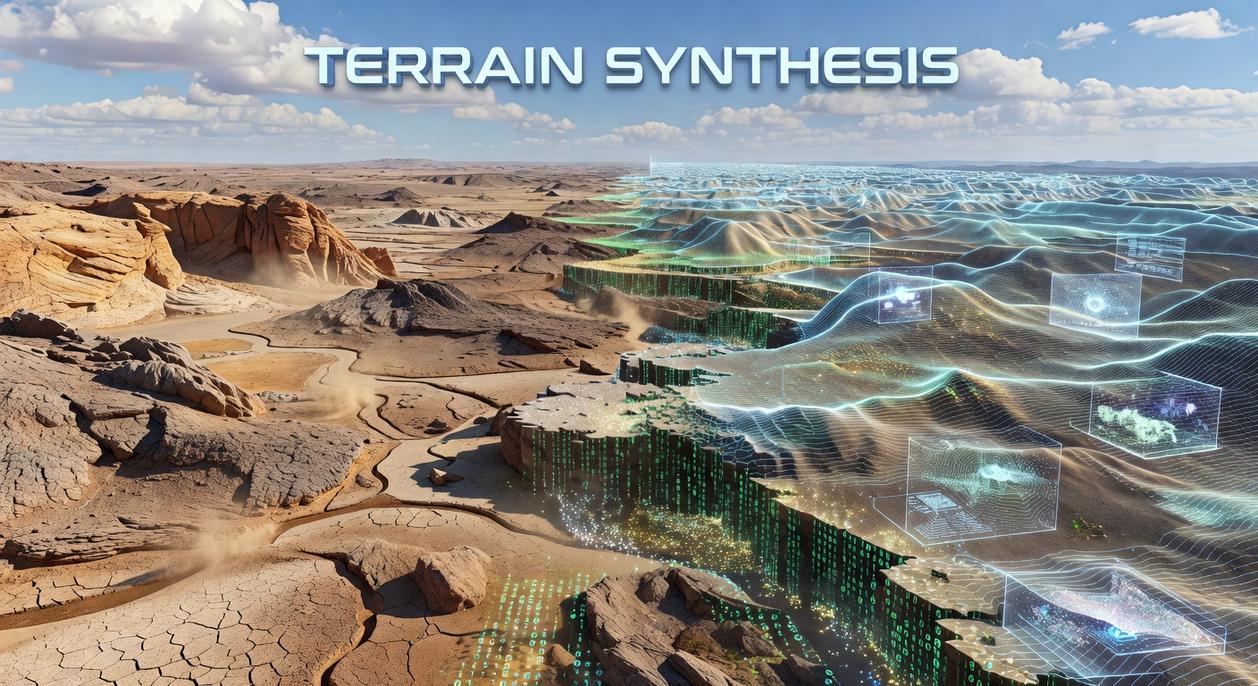
Great worlds don’t just look random—they feel intentional. The difference lies in how you shape noise into narrative.
Biome Mapping with Domain Warping
Start with a basic heightmap and you’ll get uniform hills. Functional? Sure. Memorable? Not quite. Now compare that to domain warping: instead of sampling your primary noise map directly, you distort its coordinates using a secondary noise map. In practice, this means forests bleed organically into plains, and corrupted biohazard zones twist unnervingly at their borders.
Uniform noise vs. warped noise is the difference between a tiled wallpaper and something that feels hand-painted. The technique is common in procedural terrain generation because it prevents visible repetition (players notice patterns faster than you think).
Erosion Simulation: Adding the Final Touch of Realism
Next comes erosion. Hydraulic erosion simulates water flow, carving riverbeds and valleys over time. Thermal erosion, by contrast, models gravity-driven sediment movement, creating scree slopes and softening jagged peaks. Think sharp Minecraft cliffs versus the weathered ridges in Red Dead Redemption 2.
Hydraulic vs. thermal isn’t either/or. Hydraulic defines flow; thermal defines age. Together, they make landscapes feel ancient and lived-in. Pro tip: exaggerate erosion slightly beyond realism—subtle amplification reads better at gameplay scale.
Stylistic Control for Gameplay
Of course, realism isn’t always the goal. Ridged noise produces harsh, alien-looking mountains—perfect for impassable quarantine zones. Low-frequency noise creates wide, open plains ideal for vehicle traversal in post-apocalyptic settings.
Natural realism vs. gameplay clarity is a constant trade-off. Sometimes you soften terrain for immersion. Other times, you sharpen it to guide movement—or to reinforce systems like ai driven npc behavior in survival settings, where terrain directly shapes survival tactics.
In the end, atmosphere isn’t accidental. It’s engineered.
Strategic Spawns: Procedurally Placing Resources and Challenges
Random placement vs context-aware placement is the difference between a world that feels alive and one that feels like a shuffled board game. Pure randomness drops iron in grassy plains and herbs on cliff edges (which breaks immersion fast). Context-aware systems read terrain metadata—height, slope, biome type—from procedural terrain generation and act logically. Iron spawns in rocky mountains; medicinal herbs cluster near rivers; predators patrol forest edges where prey density is high. A vs B is simple: chaos vs cohesion.
To avoid unnatural grids, use Poisson Disc Sampling—an algorithm that distributes points randomly while enforcing a minimum distance between them. Trees won’t overlap, enemy camps won’t stack awkwardly, and resource nodes won’t feel copy-pasted. Compared to uniform grid spawning, Poisson sampling creates organic spacing (think nature documentary, not Minecraft superflat).
Finally, balance gameplay loops through density control. Early zones can feature high concentrations of basic materials, guiding onboarding. Late-game biohazard regions flip the script: sparse, high-value resources guarded by procedurally placed threats. Abundance vs scarcity shapes tension. Pro tip: gradually reduce resource density while increasing traversal risk to signal progression without explicit tutorials.
Dynamic Worlds in Motion
Static maps are fading. Today’s players expect environments that react—cities that crumble after sieges, forests that regrow, wastelands reshaped by player-driven terraforming. This is more than spectacle. Research from Unity’s 2023 gaming report found 62% of players value “meaningful world interactivity.” Games like Minecraft and No Man’s Sky prove how procedural terrain generation and systemic events create lasting engagement.
Why it matters:
- Persistent consequences that alter strategy
- Emergent storytelling born from environmental change
- Infinite replayability through unpredictable states
Critics argue handcrafted maps feel tighter and balanced. Fair. But evolving systems deliver rarer: surprise (and players notice).
Your blueprint for limitless level design starts here. You now understand how to move from raw noise to worlds that breathe, decay, and fight back. Instead of handcrafting every ruined corridor, you can deploy procedural terrain generation to produce landscapes that evolve with player decisions. Some designers argue manual design ensures emotional depth. Fair. But algorithms, tuned with narrative constraints, can encode scarcity, contamination, and risk at scale. This is your competitive edge: adaptive ecosystems, systemic hazards, and resource loops competitors rarely simulate. Start small. Tweak one Perlin noise seed, then stress-test biomes against survival mechanics. Iterate. Observe. Evolve. Now.
Mastering Biohazard Game Mechanics for Survival and Strategy
You set out to understand how biohazard mechanics, evolving level design, and resource systems shape survival in post-apocalyptic games. Now you’ve seen how environmental threats, adaptive AI, and procedural terrain generation work together to create tension, scarcity, and strategic depth.
The difference between surviving and restarting often comes down to preparation and smart resource routing. When levels shift unpredictably and contamination zones expand without warning, hesitation costs you progress. Mastering these systems isn’t just about skill—it’s about knowing how to anticipate environmental patterns, optimize inventory cycles, and adapt to dynamic terrain logic.
If you’re tired of wasting runs due to poor resource planning or unpredictable map layouts, it’s time to refine your approach. Study terrain behavior, map contamination spread early, and test loadout efficiency under pressure scenarios.
Ready to gain a competitive edge? Dive deeper into advanced breakdowns, strategy guides, and real-time mechanic analysis trusted by thousands of survival gamers. Level up your biohazard strategy now and turn every hostile map into a calculated advantage.
 Ask Bonnien Hursteanage how they got into in-game resource management hacks and you'll probably get a longer answer than you expected. The short version: Bonnien started doing it, got genuinely hooked, and at some point realized they had accumulated enough hard-won knowledge that it would be a waste not to share it. So they started writing.
What makes Bonnien worth reading is that they skips the obvious stuff. Nobody needs another surface-level take on In-Game Resource Management Hacks, Curious Insights, Post-Apocalyptic Game Engine Innovations. What readers actually want is the nuance — the part that only becomes clear after you've made a few mistakes and figured out why. That's the territory Bonnien operates in. The writing is direct, occasionally blunt, and always built around what's actually true rather than what sounds good in an article. They has little patience for filler, which means they's pieces tend to be denser with real information than the average post on the same subject.
Bonnien doesn't write to impress anyone. They writes because they has things to say that they genuinely thinks people should hear. That motivation — basic as it sounds — produces something noticeably different from content written for clicks or word count. Readers pick up on it. The comments on Bonnien's work tend to reflect that.
Ask Bonnien Hursteanage how they got into in-game resource management hacks and you'll probably get a longer answer than you expected. The short version: Bonnien started doing it, got genuinely hooked, and at some point realized they had accumulated enough hard-won knowledge that it would be a waste not to share it. So they started writing.
What makes Bonnien worth reading is that they skips the obvious stuff. Nobody needs another surface-level take on In-Game Resource Management Hacks, Curious Insights, Post-Apocalyptic Game Engine Innovations. What readers actually want is the nuance — the part that only becomes clear after you've made a few mistakes and figured out why. That's the territory Bonnien operates in. The writing is direct, occasionally blunt, and always built around what's actually true rather than what sounds good in an article. They has little patience for filler, which means they's pieces tend to be denser with real information than the average post on the same subject.
Bonnien doesn't write to impress anyone. They writes because they has things to say that they genuinely thinks people should hear. That motivation — basic as it sounds — produces something noticeably different from content written for clicks or word count. Readers pick up on it. The comments on Bonnien's work tend to reflect that.