
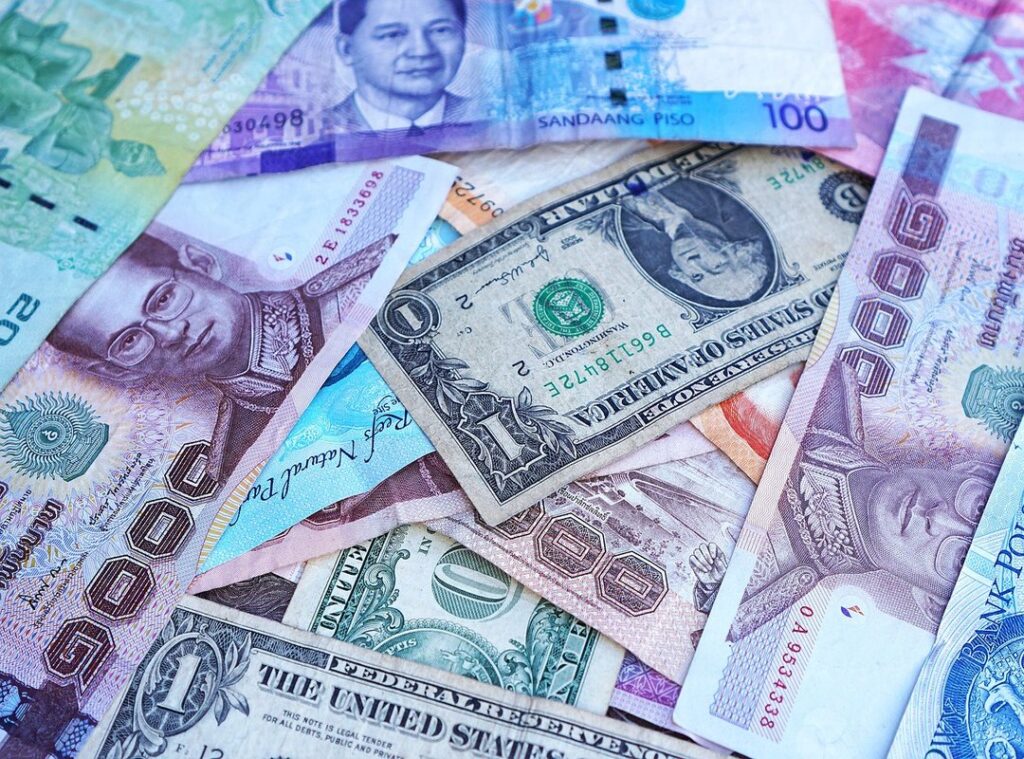
You want to know what 9.99 US dollars is in Chilean pesos, and this guide will give you that and much more. 9.99 dolares a pesos chilenos can vary, and I’ll explain why that number changes daily.
My goal is to empower you to understand exchange rates, avoid hidden fees, and find the best way to convert your money. The value can differ depending on where and how you exchange it, like at a bank or through an online service.
This guide breaks down everything in simple, easy-to-understand terms. No confusing financial jargon here, and let’s get started.
The Current Value: What is $9.99 USD in CLP Today?
As of today, $9.99 USD converts to approximately 8,000 CLP based on the current mid-market exchange rate. The mid-market rate is the real exchange rate without any hidden markups, used by banks and transfer services for trading among themselves.
This rate is a benchmark. The actual rate you get will usually be slightly different due to service fees and profit margins.
Here’s a small historical context to show the value of $9.99 USD in CLP:
- A week ago: 7,900 CLP
- A month ago: 7,800 CLP
- A year ago: 7,500 CLP
These numbers illustrate the volatility in currency values. Checking a live currency converter is crucial for the most up-to-the-minute information before making any transaction.
Remember, 9.99 dolares a pesos chilenos can fluctuate, so always double-check the latest rates.
Why Does the USD to CLP Exchange Rate Fluctuate?
Have you ever wondered why the exchange rate between the US dollar and the Chilean peso changes so much? It’s all about supply and demand.
If more people want USD than CLP, the dollar’s value increases against the peso. Simple, right? But it gets more complex when you factor in economic health.
US and Chilean inflation rates, GDP growth, and employment data all play a role. When one country’s economy is booming, its currency tends to strengthen.
Interest rates set by central banks also matter. Decisions by the US Federal Reserve and the Central Bank of Chile can make a currency more or less attractive to foreign investors. Higher interest rates usually mean a stronger currency.
Chile’s economy is heavily influenced by commodity prices, especially copper. Since copper is a major Chilean export priced in USD, a rise in copper prices often strengthens the peso.
Political stability and investor sentiment can cause short-term fluctuations too. If there’s uncertainty in Chile, investors might pull out, weakening the peso.
So, if you’re looking at 9.99 dolares a pesos chilenos, remember that a lot of factors are at play. It’s not just about one thing; it’s a mix of economic, political, and market forces.
Best Ways to Convert Dollars to Pesos: A Comparison
Method 1: Traditional Banks
Traditional banks offer a sense of security and convenience, especially if you’re already a customer. However, they often have poor exchange rates and high fixed fees. It’s like paying extra for peace of mind. 9.99 dolares a
Method 2: Online Money Transfer Services
Online services like Wise, Remitly, or WorldRemit are popular for a reason. They typically offer better rates and lower fees. Plus, the transfers are usually faster.
The catch? You need an online account, and there might be transfer limits. But for most people, it’s worth it.
Method 3: Airport/Physical Currency Exchanges
If you’re in a pinch, airport or physical currency exchanges can help. But let me be clear: this is usually the worst option. The exchange rates are terrible, and the fees are high.
Save this for small emergencies only.
Method 4: Using a Credit/Debit Card Abroad
Using your credit or debit card abroad is convenient. Just be wary of dynamic currency conversion (DCC) and foreign transaction fees. Always choose to be charged in the local currency (CLP).
It can save you a lot of money in the long run.
Comparison Table
| Method | Best Use Case | Typical Fees | Exchange Rate Quality |
|---|---|---|---|
| Traditional Banks | Large, secure transactions | High fixed fees | Poor |
| Online Money Transfer Services | Regular, cost-effective transfers | Lower, variable fees | Better |
| Airport/Physical Currency Exchanges | Small, emergency needs | Very high | Terrible |
| Credit/Debit Card Abroad | Convenient, everyday use | Foreign transaction fees, DCC | Good, if charged in CLP |
In the end, it’s all about finding the right balance. For instance, converting 9.99 dolares a pesos chilenos might be a small amount, but the method you choose can make a big difference. Stick with what works best for your situation.
How to Avoid Hidden Fees and Get the Best Rate

You see those services that promise “zero fees” or “0% commission”? Be wary. They often hide their profit in a poor exchange rate.
Let’s get real. To find the true cost, compare the final amount the recipient gets in CLP from different services for the same starting amount of $9.99 USD.
Here’s the deal: the spread is the difference between the mid-market rate (the real exchange rate) and the rate offered to you. A smaller spread means a better deal, and simple, right?
| Service | Final Amount in CLP | Spread |
|---|---|---|
| Service A | 5,000 CLP | 2% |
| Service B | 4,800 CLP | 5% |
Plan ahead. Exchange rates are often better for larger amounts and non-urgent transfers. So, converting money before you’re in a rush can save you money.
Use a comparison tool or website to see a live ranking of the best rates and lowest fees from various providers. It’s like having a cheat sheet for your wallet.
Remember, 9.99 dolares a pesos chilenos can vary widely. Always do the math and check the spread.
Making Your Money Go Further, from Dollars to Pesos
The exact value of 9.99 dolares a pesos chilenos depends on the daily exchange rate and the specific service you choose. Understanding why these rates fluctuate can give you more control over your financial decisions. Always compare different transfer services to find the best balance between a good exchange rate and low fees.
Use this knowledge to make informed choices for all your future currency conversions, not just this one.
 Ask Rose Artisevonics how they got into evolving level design and player behavior and you'll probably get a longer answer than you expected. The short version: Rose started doing it, got genuinely hooked, and at some point realized they had accumulated enough hard-won knowledge that it would be a waste not to share it. So they started writing.
What makes Rose worth reading is that they skips the obvious stuff. Nobody needs another surface-level take on Evolving Level Design and Player Behavior, Game Industry Buzz, Post-Apocalyptic Game Engine Innovations. What readers actually want is the nuance — the part that only becomes clear after you've made a few mistakes and figured out why. That's the territory Rose operates in. The writing is direct, occasionally blunt, and always built around what's actually true rather than what sounds good in an article. They has little patience for filler, which means they's pieces tend to be denser with real information than the average post on the same subject.
Rose doesn't write to impress anyone. They writes because they has things to say that they genuinely thinks people should hear. That motivation — basic as it sounds — produces something noticeably different from content written for clicks or word count. Readers pick up on it. The comments on Rose's work tend to reflect that.
Ask Rose Artisevonics how they got into evolving level design and player behavior and you'll probably get a longer answer than you expected. The short version: Rose started doing it, got genuinely hooked, and at some point realized they had accumulated enough hard-won knowledge that it would be a waste not to share it. So they started writing.
What makes Rose worth reading is that they skips the obvious stuff. Nobody needs another surface-level take on Evolving Level Design and Player Behavior, Game Industry Buzz, Post-Apocalyptic Game Engine Innovations. What readers actually want is the nuance — the part that only becomes clear after you've made a few mistakes and figured out why. That's the territory Rose operates in. The writing is direct, occasionally blunt, and always built around what's actually true rather than what sounds good in an article. They has little patience for filler, which means they's pieces tend to be denser with real information than the average post on the same subject.
Rose doesn't write to impress anyone. They writes because they has things to say that they genuinely thinks people should hear. That motivation — basic as it sounds — produces something noticeably different from content written for clicks or word count. Readers pick up on it. The comments on Rose's work tend to reflect that.